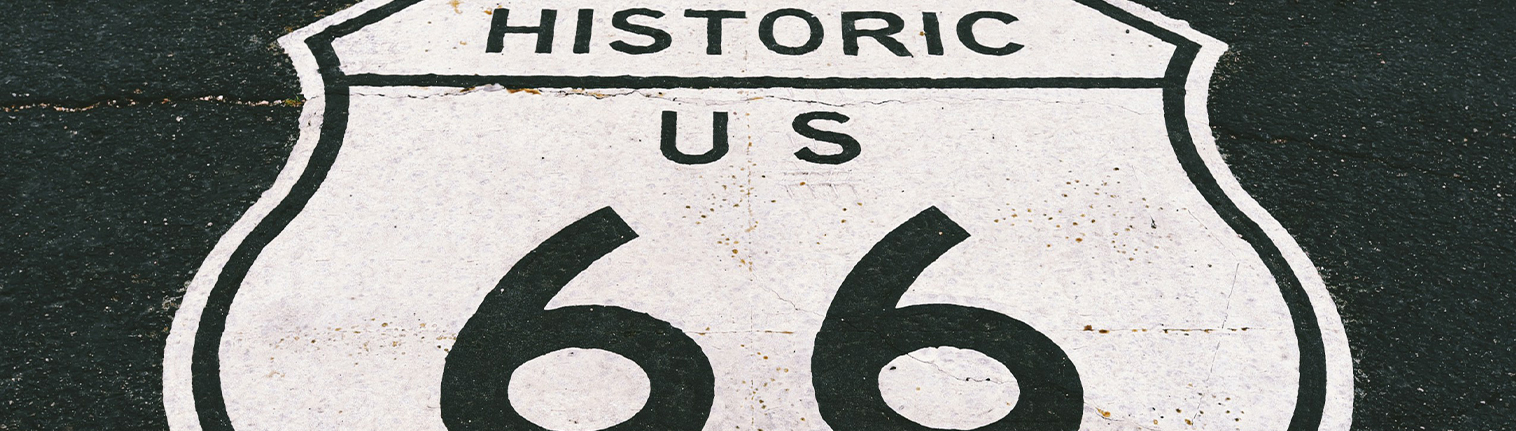
100 Years Later, It’s Still About the Drive
Route 66 turns 100 in 2026, and there may never be a better excuse to point the hood toward America’s most famous highway.
Established in 1926, the Mother Road connected Chicago with the West and stretches through eight states and roughly 2,448 miles, linking big cities, tiny towns, old motor courts, neon signs, diners, museums, gas stations, desert highways and enough roadside weirdness to fill several trips. It inspired an entirely new culture built around the automobile. Today, Route 66 Centennial Communities are celebrating by adding new monuments, events and commemorating a century of American road-trip history.
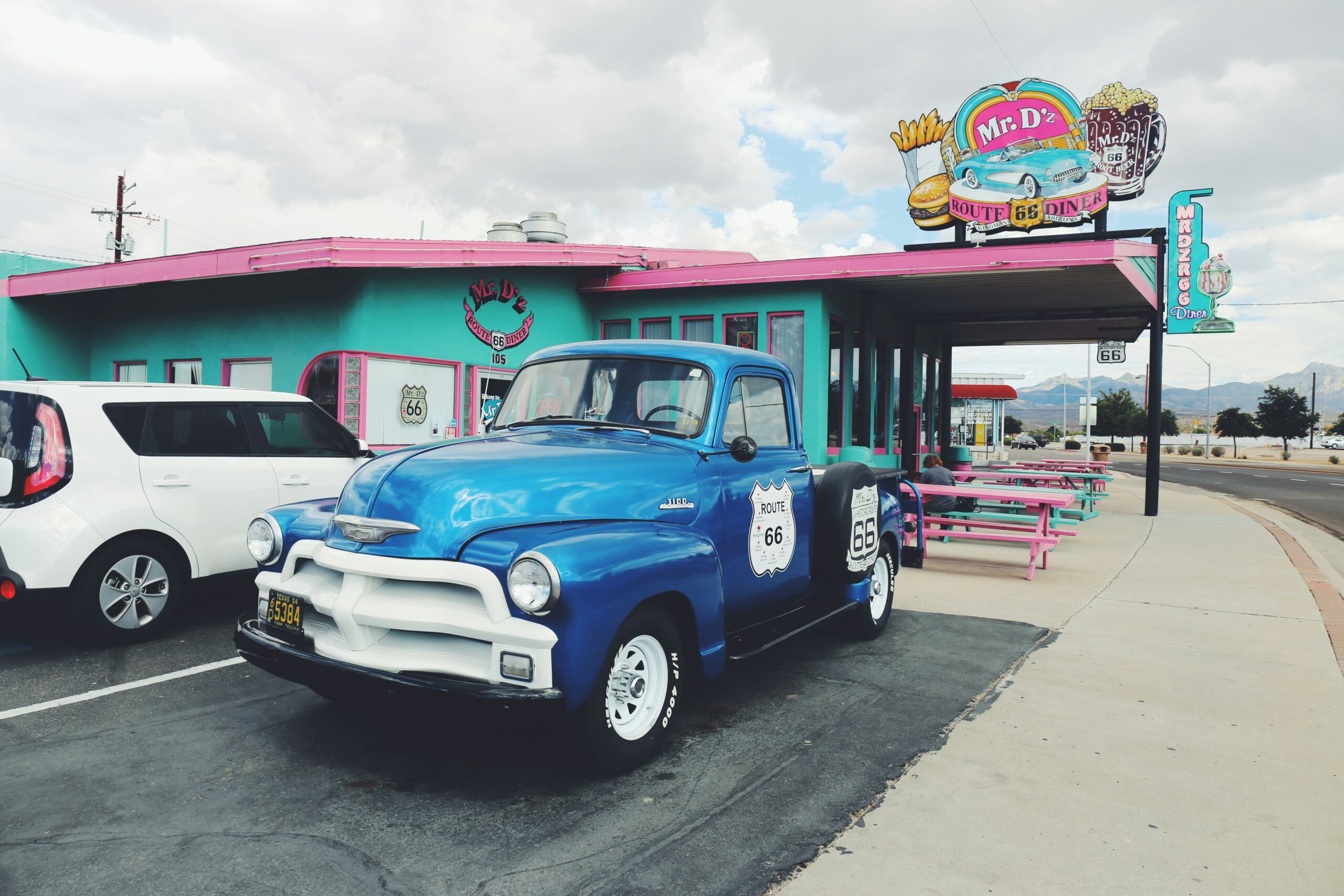
Before You Go: Decide What Kind of Route 66 Trip You Want
This is part of the fun.
On websites like Route66RoadMap.com there are currently 544 cataloged things to do, including more than 360 roadside attractions, so the real challenge isn’t finding stops. It is more or less deciding what kind of Mother Road trip you want to have.
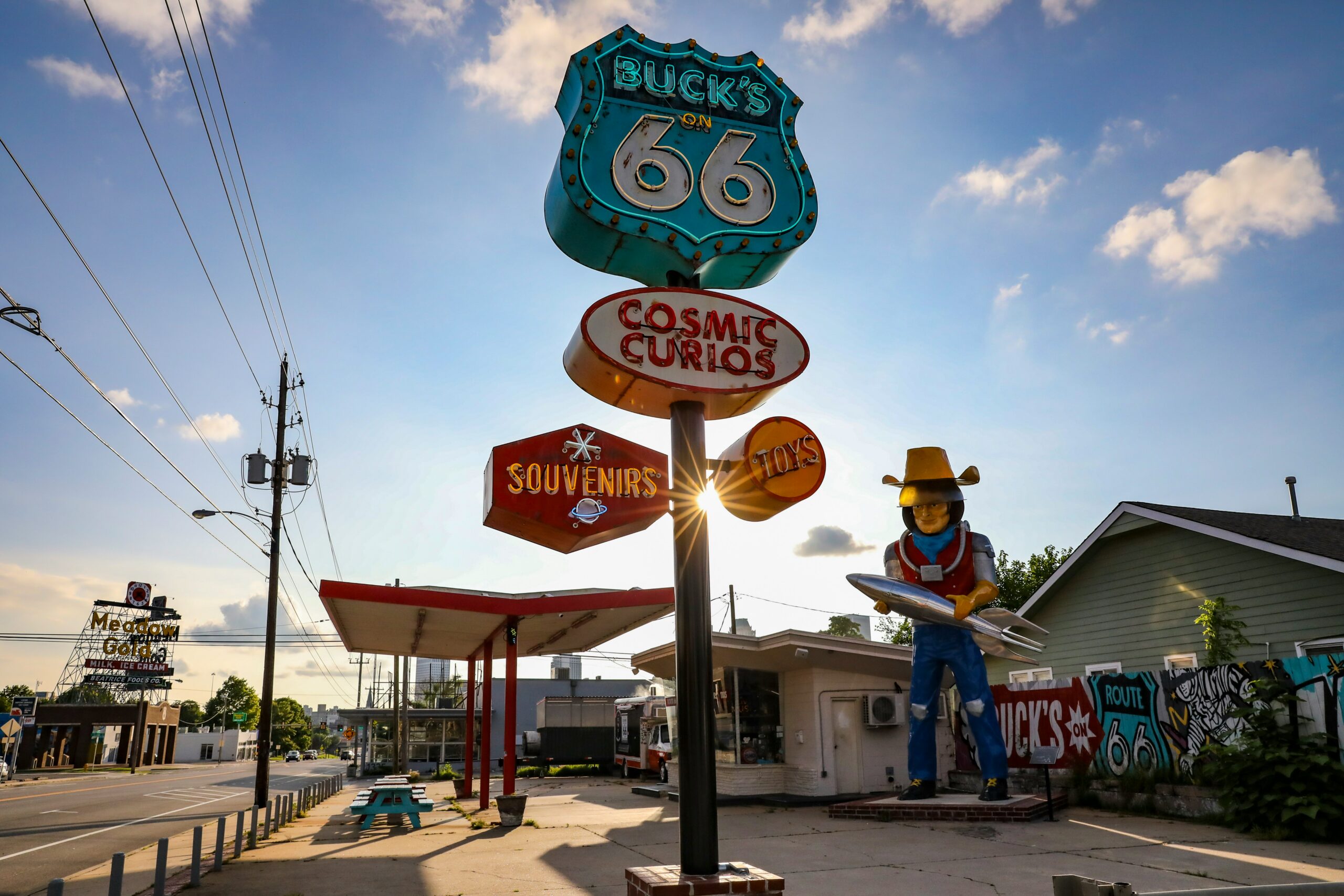
Want roadside Americana? Chase vintage service stations, giant statues, Muffler Men, murals and neon.
Want automotive history? Build your itinerary around Route 66 museums, classic cars, abandoned filling stations and old highway alignments.
Hungry? You could practically plan the trip around diners, drive-ins, barbecue joints, burger stands and pie.
The Route 66 Road Map directory organizes attractions by roadside attractions, museums, accommodations, dining, shopping, tours and outdoor activities, making it easy to build a road trip around what actually interests you rather than somebody else’s checklist.
Here are 10 tips for building your own Route 66 road trip—with plenty of ideas scattered along the way.
1. Don’t Race Route 66: Take It All In
Yes, you could put your head down and cover serious mileage. Don’t.
Give yourself enough time to turn around when you see an old gas station, stop for lunch somewhere that still has a counter, or spend an hour talking cars with somebody you just met.
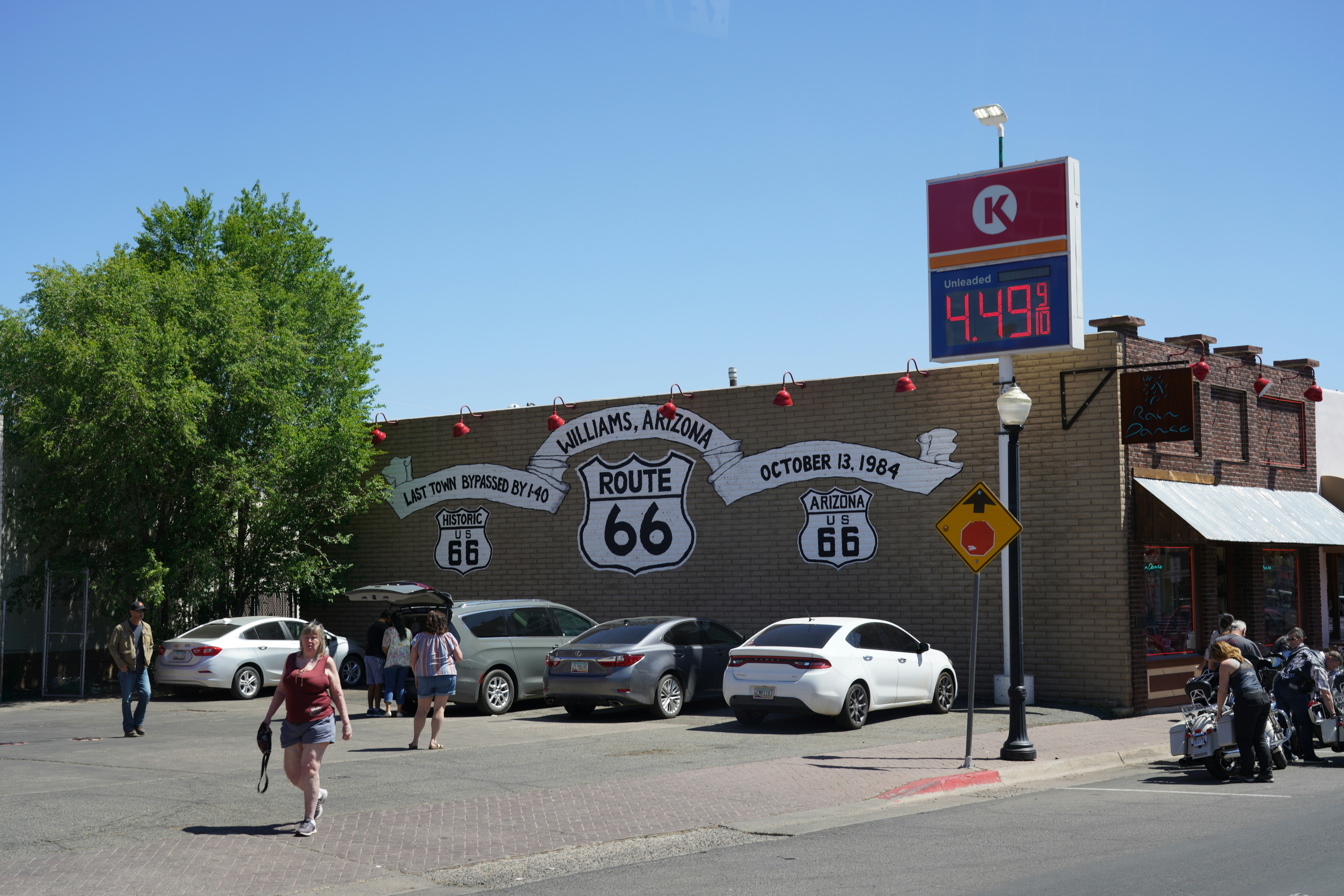
The whole point is being able to hit the brakes when something catches your eye.
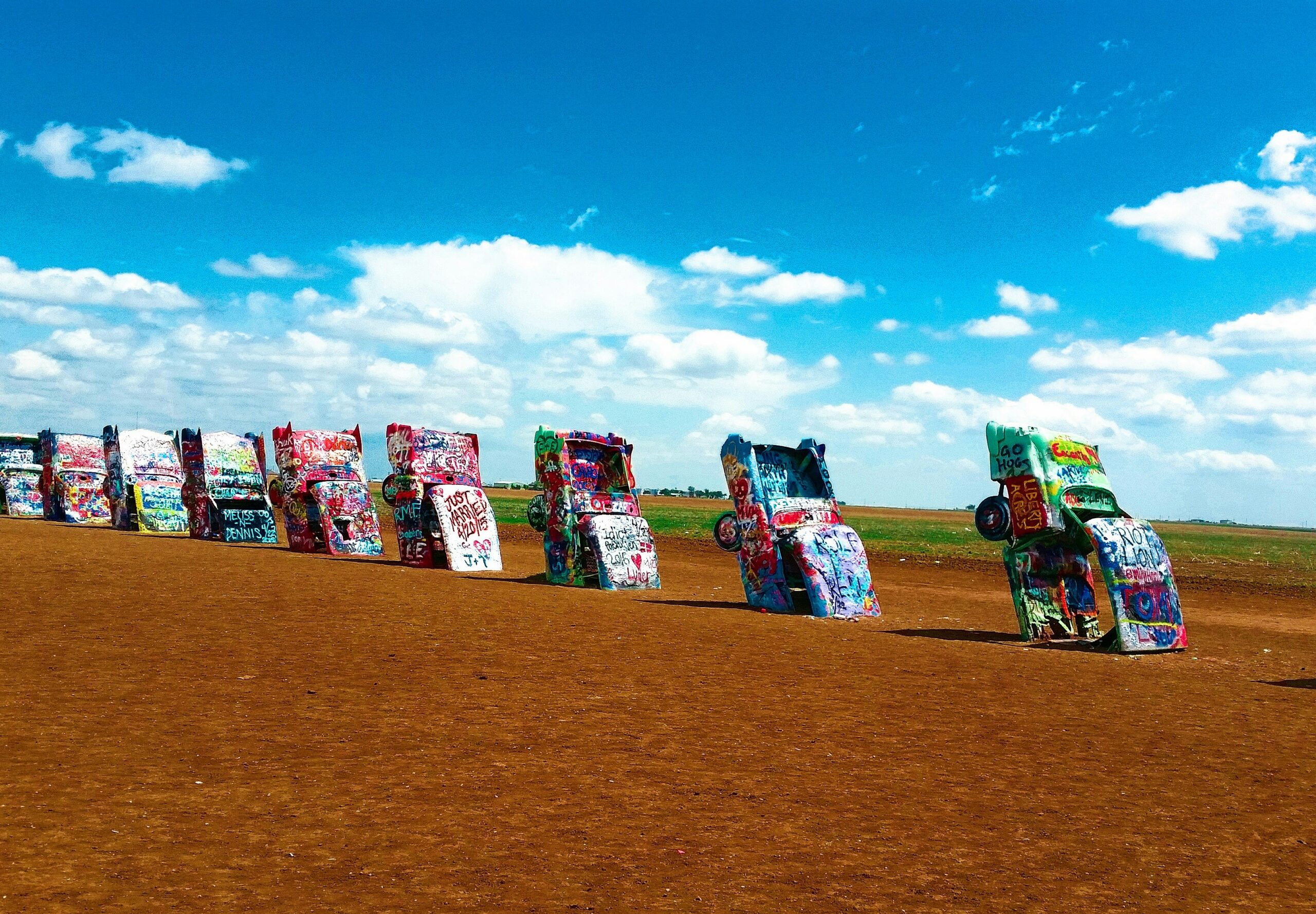
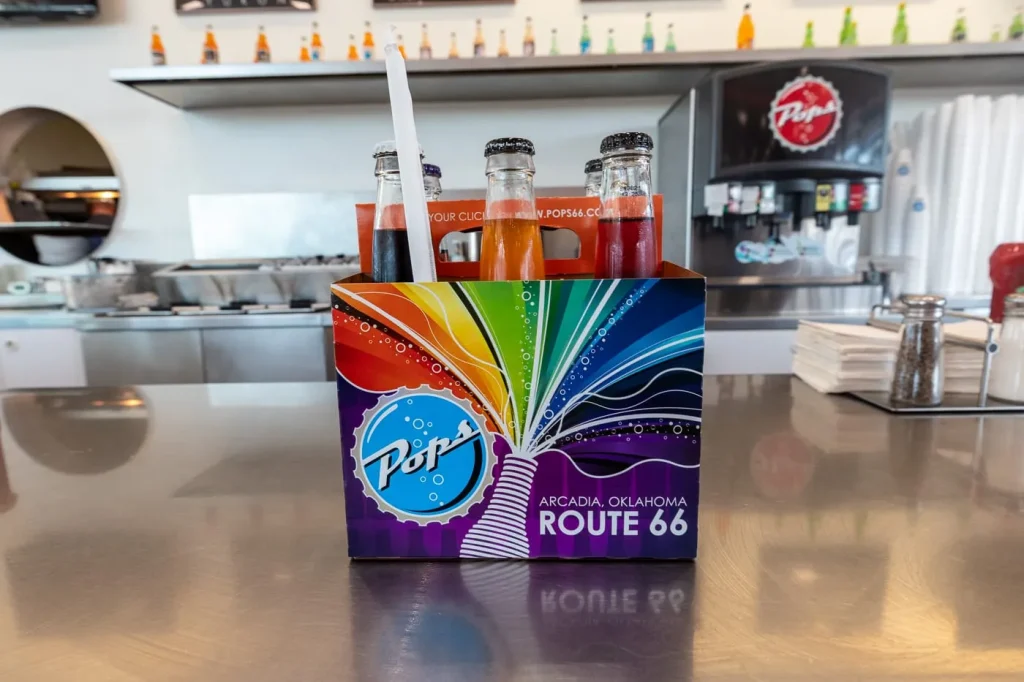
That could be the Gemini Giant in Illinois, the Blue Whale of Catoosa, the giant soda bottle at Pops 66 Soda Ranch, the buried Cadillacs at Cadillac Ranch, a yard full of old cars at Hackberry General Store, or the lonely neon sign at Roy’s Motel & Café in the Mojave.
Route 66 Road Map catalogs everything from vintage gas stations and neon signs to strange sculptures, murals and “world’s largest” attractions across the eight-state corridor.
2. Follow the Old Road, Not Just the Fast Road
Modern navigation wants to save you time. Route 66 wants you to waste some. Don’t blindly follow whatever route your phone thinks is fastest.
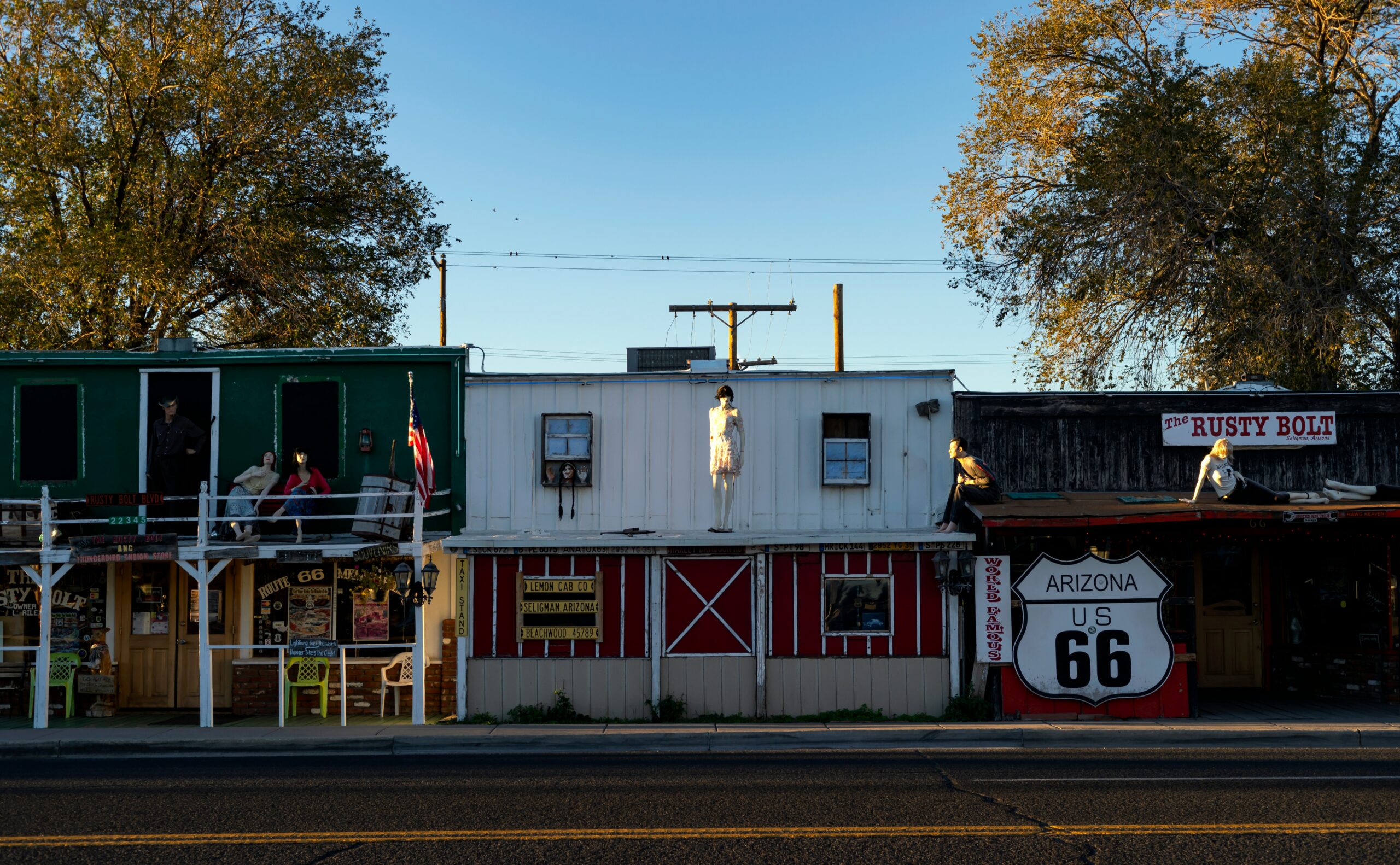
Look for the historic alignments through places like Cuba, Missouri; Arcadia and Clinton, Oklahoma; Tucumcari and Albuquerque, New Mexico; Seligman, Kingman and Hackberry, Arizona; and Amboy, San Bernardino and Santa Monica, California.
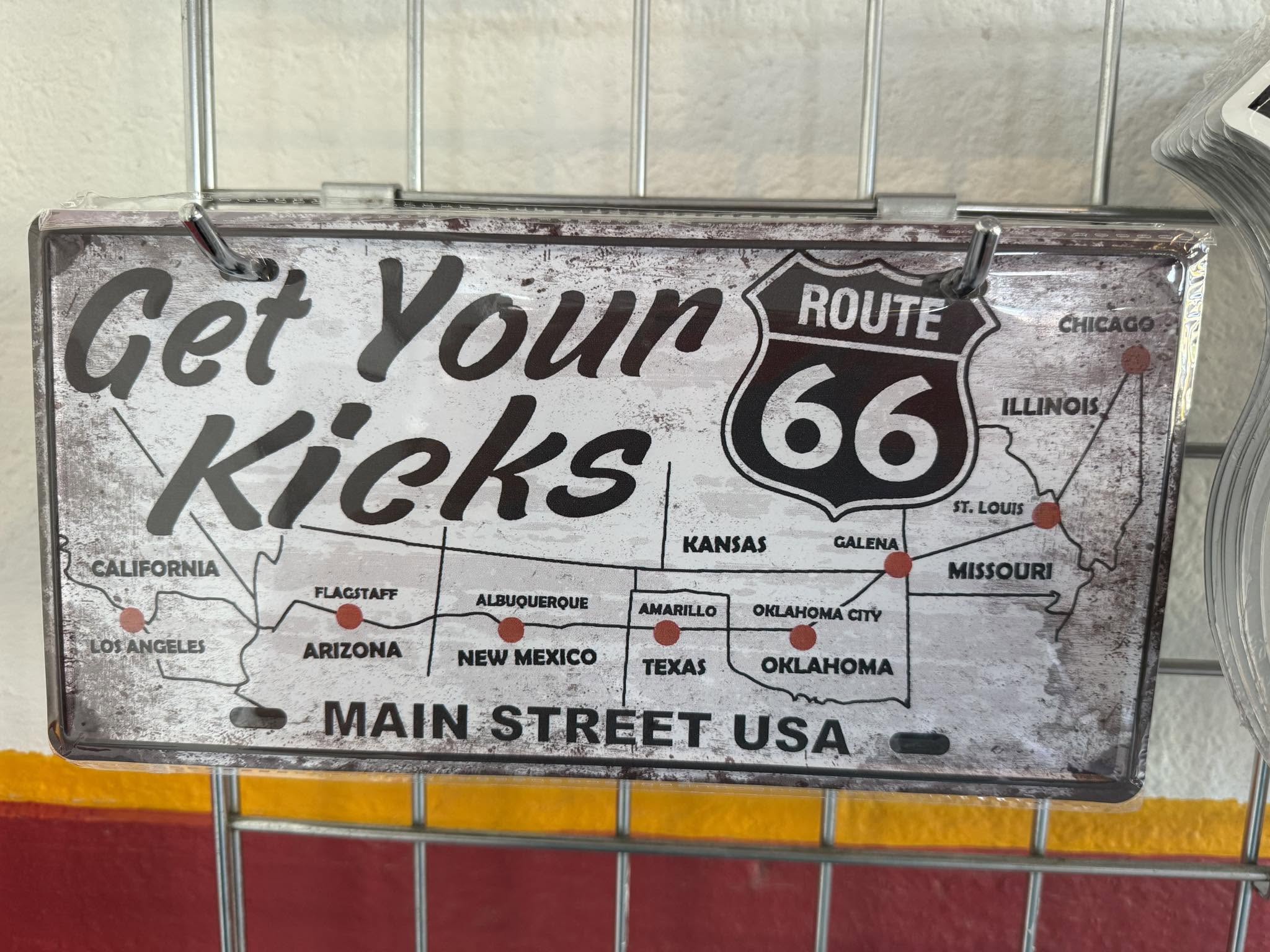
Use a dedicated Route 66 map alongside your normal navigation. Having a plan is great for a general guide and planned itinerary, but give yourself freedom to flourish and wander.
Interstates bypassed many of the small towns and businesses that once depended on Mother Road traffic. Hackberry declined when I-40 bypassed the Kingman-to-Seligman corridor, while Amboy’s fortunes changed dramatically when Interstate 40 routed traffic away in 1972. Keep in mind, Route 66 was officially decommissioned in 1985, and different historic alignments remain across the country.
3. Give the Trip a Beginning, a Middle and an End
Road trips are better when they have milestones. There’s no law saying Route 66 has to be driven Chicago-to-California.
But heading west gives the trip its classic narrative:
City → Plains → Southwest → Desert → Pacific.
Traveling west, start with breakfast at Lou Mitchell’s in Chicago, which opened in 1923 and became a traditional departure point near the beginning of Route 66.
Then celebrate the halfway mark in Adrian, Texas.
The Route 66 Midpoint is 1,139 miles from either endpoint, complete with the Midpoint Sign, a line across the road and the nearby Midpoint Café for burgers, breakfast and its famous “ugly” pies.
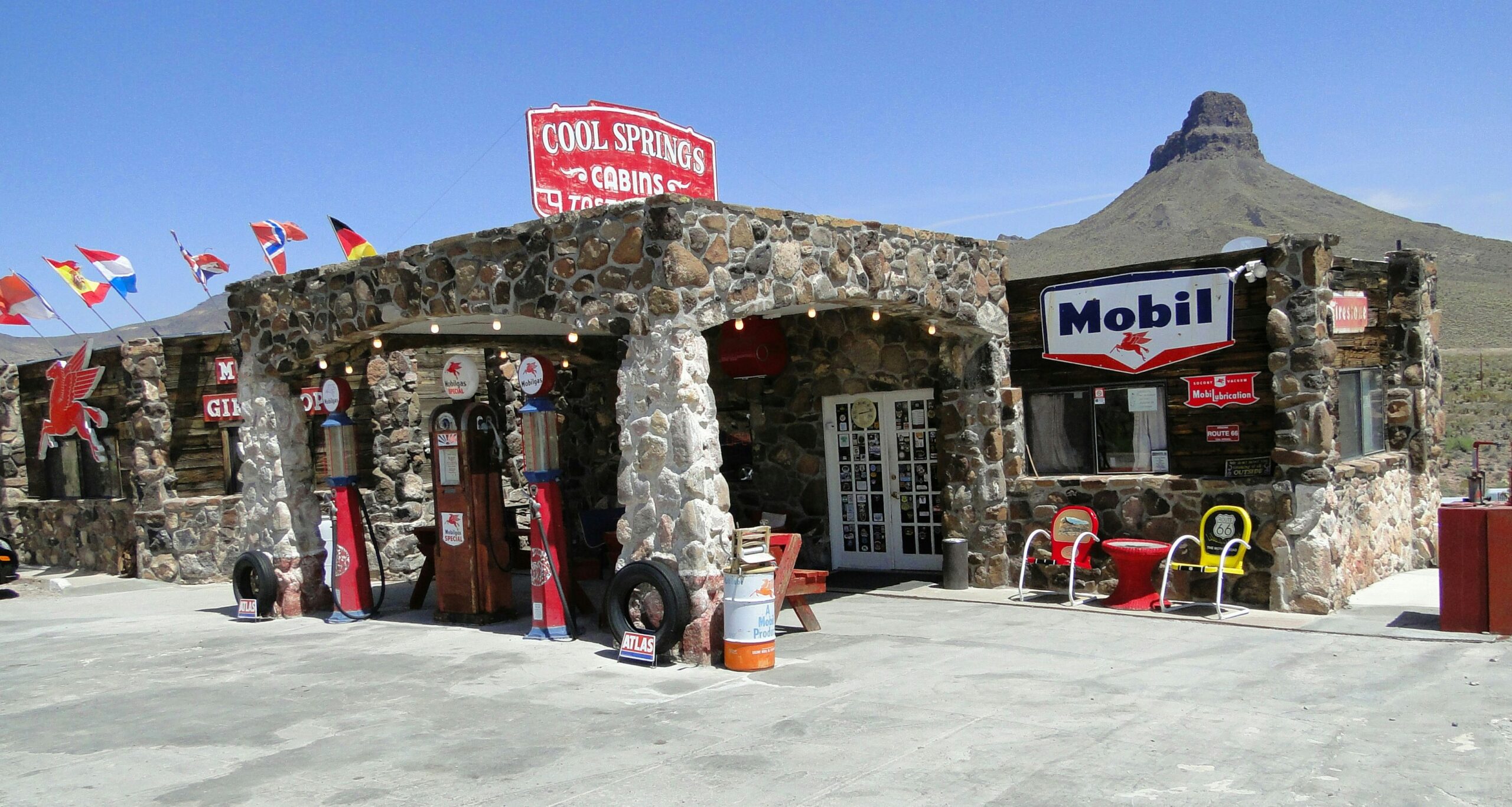
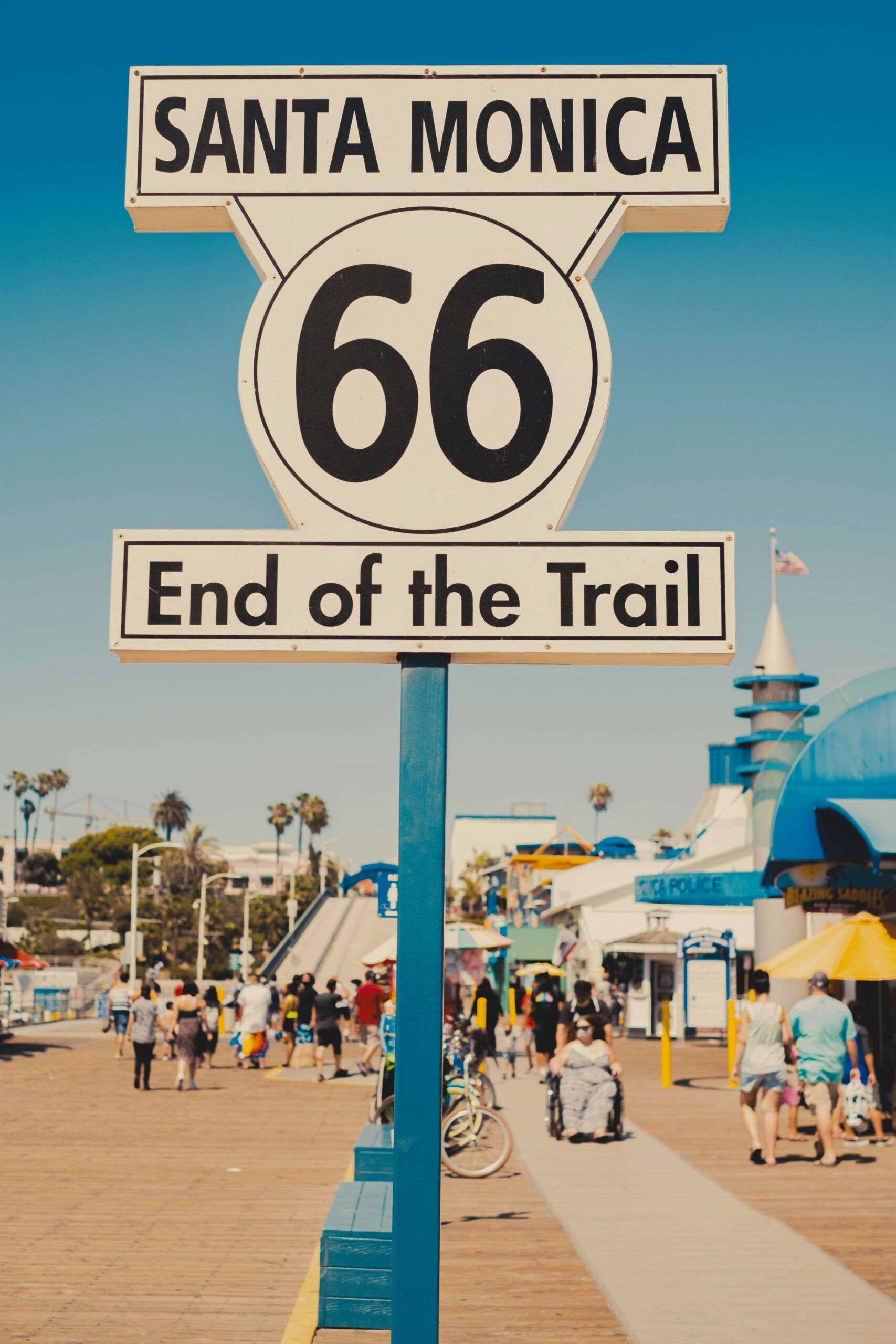
At the other end, walk onto the Santa Monica Pier and take the obligatory photo at the “End of the Trail” sign. The pier isn’t Route 66’s historical official terminus, but it has become the road trip’s symbolic finish line.
4. Just Drive Something You Love
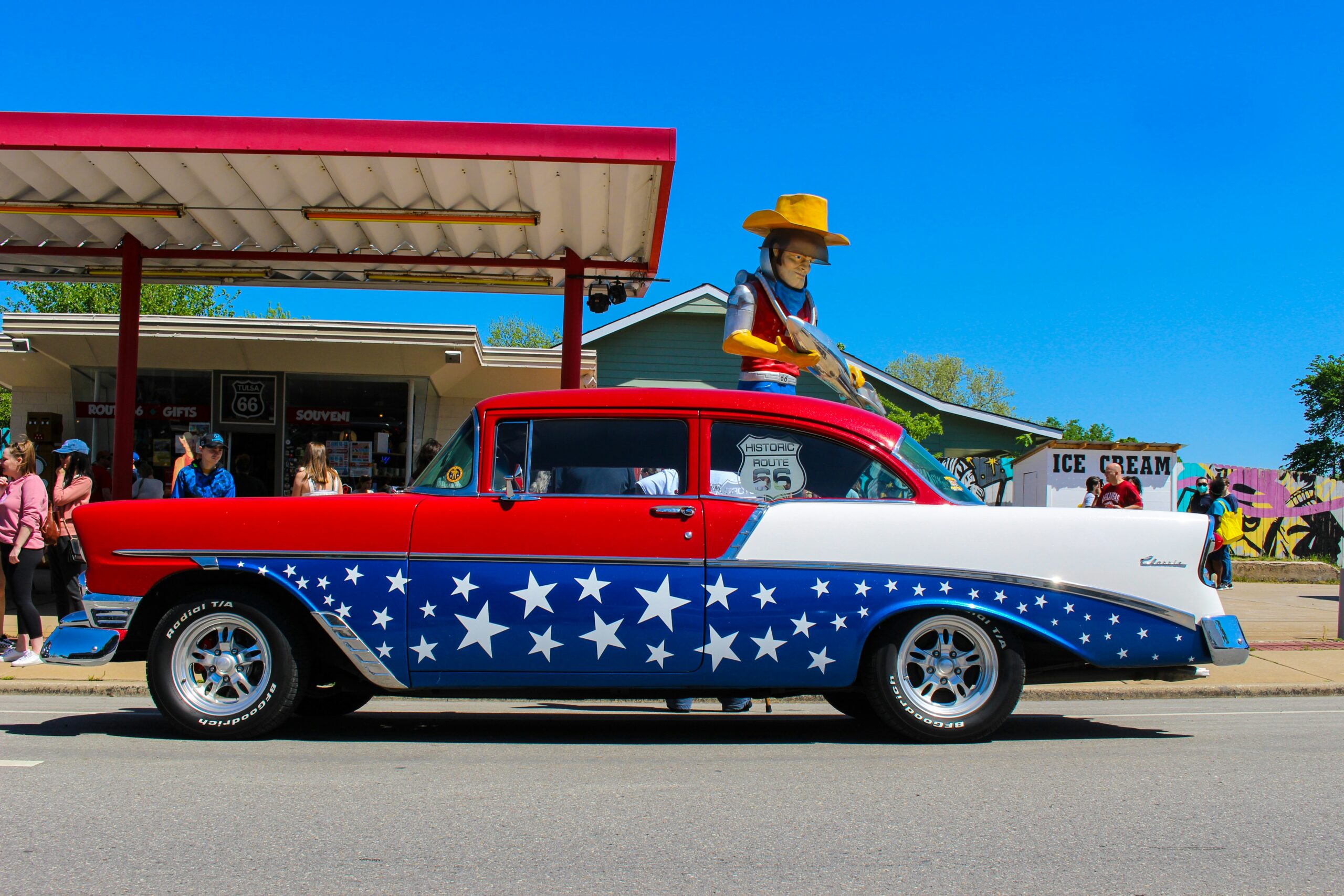
This is an important one. Don’t get hung up on having the “right” Route 66 vehicle.
Muscle car? Perfect. Classic pickup? Absolutely. Corvette? You understood the assignment. Modern Mustang? Send it. Honda Accord you’ve modified exactly the way you like it? Why not?
Route 66 became legendary because ordinary people got into automobiles and discovered what was waiting down the road. A century later, that’s still the whole idea.
The main thing is to make the commitment to go enjoy the experience, make memories, and live. Just drive whatever but it is better if you love your ride.
Get It Right For The Road
This is a road trip, and you are asking your vehicle to cover serious mileage. You want the ride to be ready and road worthy
Before leaving, check:
- Tires and spare
- Brakes
- Fluids
- Battery
- Belts and hoses
- Lights
- Wipers
- Basic tools
- Roadside/emergency gear (food/water/spares/etc.)
A quick garage inspection is considerably more enjoyable than waiting for a tow truck outside Needles.
Keep Fuel in the Tank
There are sections of the Southwest where services become a lot less frequent than they were back in Illinois.
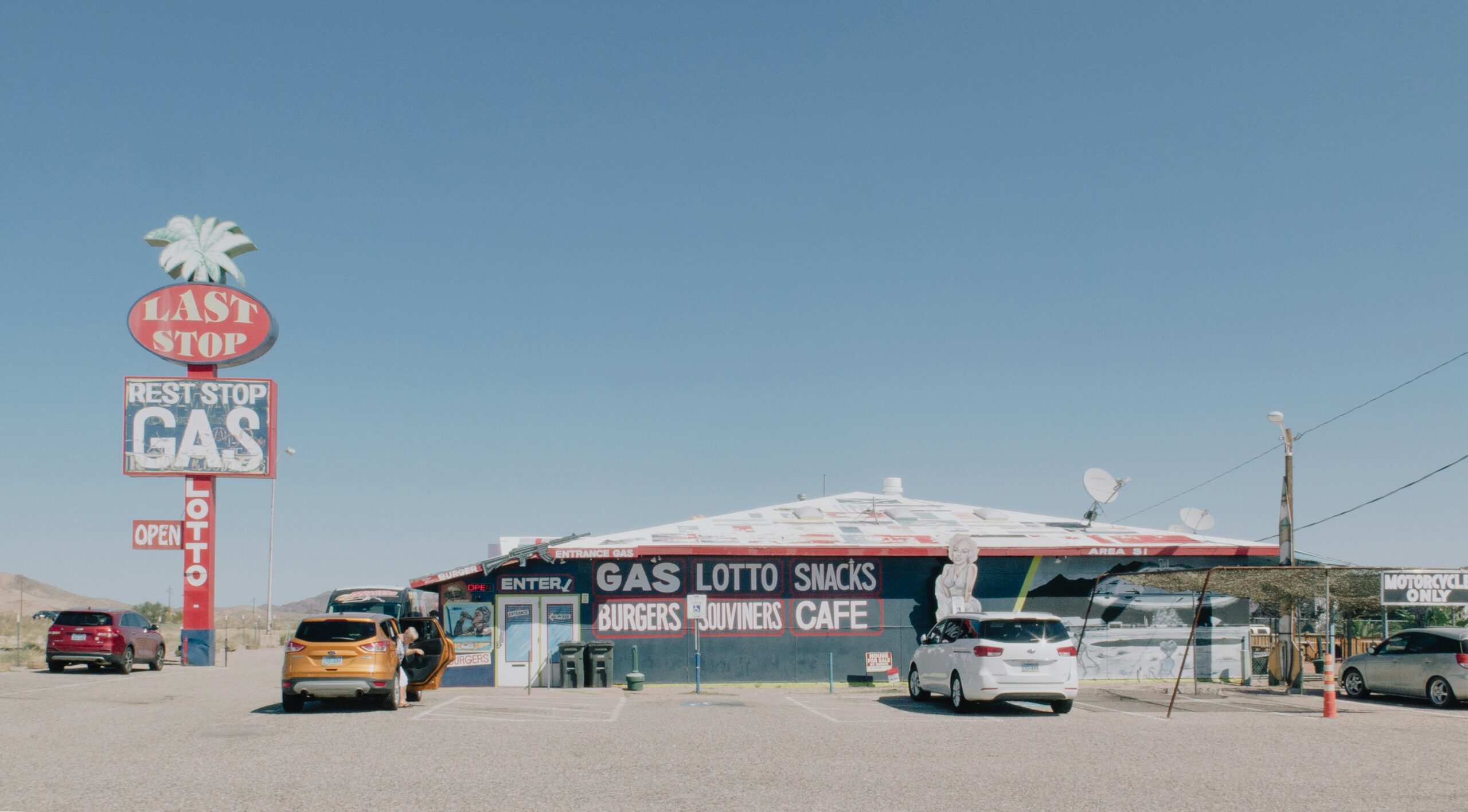
Our rule? Half a tank starts feeling like empty, especially before getting deep into desert stretches. Fill up any time you are around half a tank. Better yet, if you spot the cheap gas station, grab a fill up at your convenience.
5. Eat Somewhere You Can’t Eat Back Home
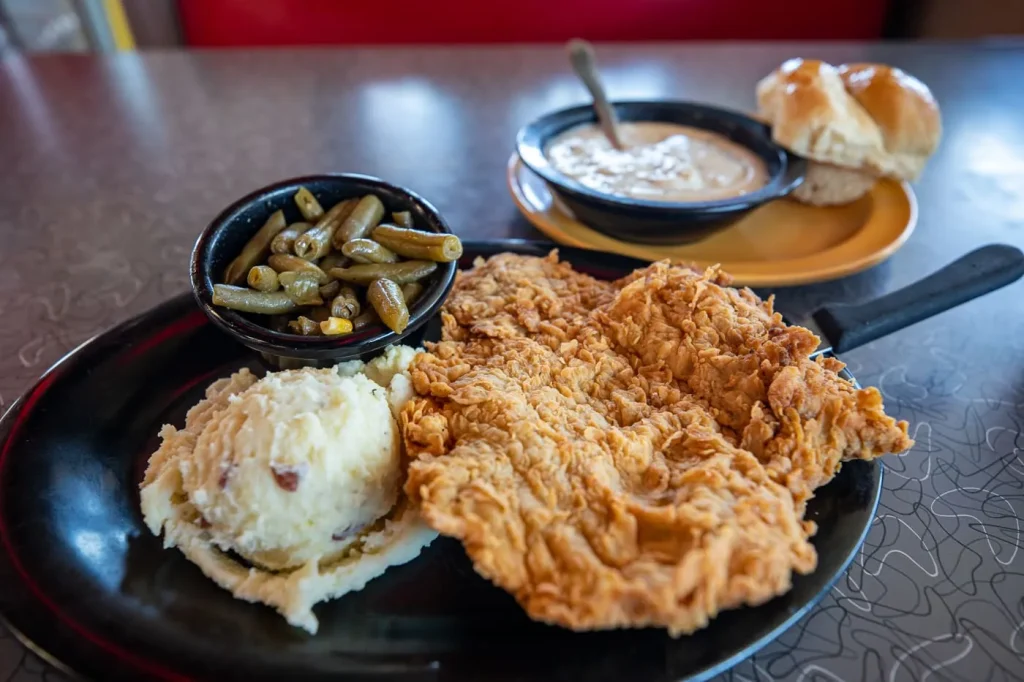
You can hit a drive-through anywhere. You and your passengers deserve better and the Route 66 Mother Road delivers. There are of course the world-famous classics, but now you can expect unique options anywhere the route is alive and thriving.
Reserve ahead of time and for the important overnight stops.
Leave the rest loose. That hand-painted sign pointing toward something three miles off the highway might turn into the best stop of the trip.
Here are some of the favorites:
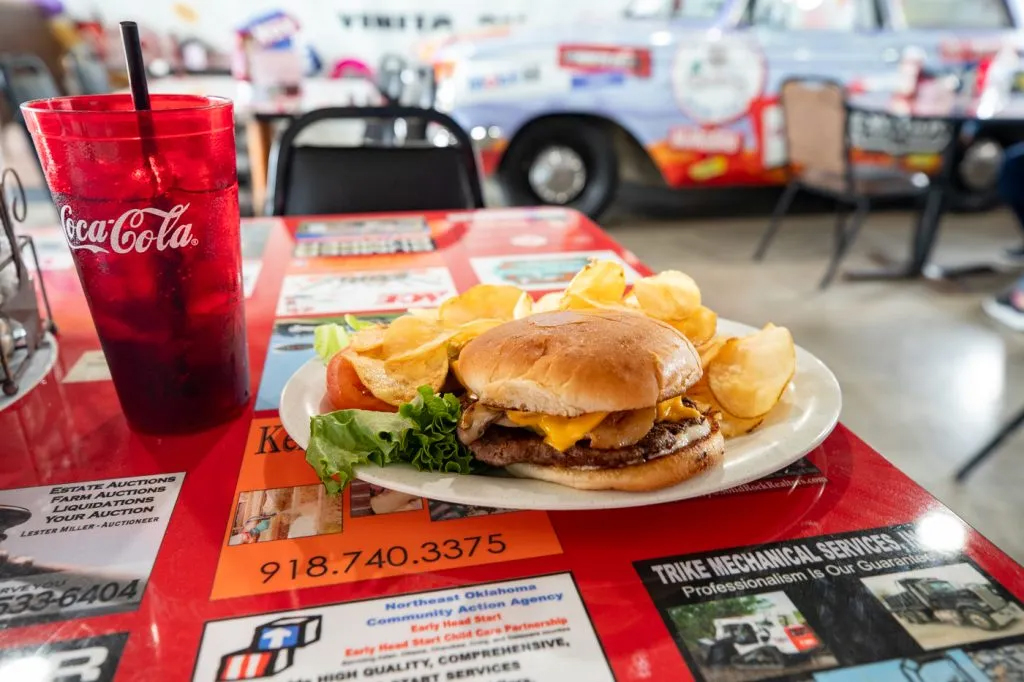
- Lou Mitchell’s — Chicago, Illinois:
Famous diner at the beginning of Route 66. It has been feeding travelers since 1923. - Cozy Dog Drive-In — Springfield, Illinois:
Famous for the original-style corn dog and old-school roadside charm. - Ted Drewes Frozen Custard — St. Louis, Missouri:
Legendary for thick frozen custard served so thick it can be turned upside down. - Clanton’s Café — Vinita, Oklahoma:
Route 66 staple famous for chicken-fried steak, calf fries, and homemade pie. - Lucille’s Roadhouse — Weatherford, Oklahoma:
Retro Mother Road stop serving classic American comfort food in Weatherford. - Midpoint Café — Adrian, Texas:
The halfway point of Route 66, known for burgers and homemade “Ugly Crust” pie. - The Big Texan Steak Ranch — Amarillo, Texas:
Amarillo icon famous for its massive 72-ounce steak challenge. - 66 Diner — Albuquerque, New Mexico:
A restored 1950s diner packed with neon, automobilia, burgers, and milkshakes. - Delgadillo’s Snow Cap Drive-In — Seligman, Arizona:
Seligman legend serving burgers, shakes, pranks, and real personality since 1953. - Emma Jean’s Holland Burger Café — Victorville, California:
A tiny famous roadside diner known for hearty burgers and old-school atmosphere. You might have seen it featured in Diners, Drive-Ins and Dives and Kill Bill: Vol. 2.
6. Stay Somewhere With a Neon Sign
Hotels are practical. Motor courts are Route 66.
The highway helped create an entire style of roadside lodging built around the automobile, and several classics are still taking reservations.
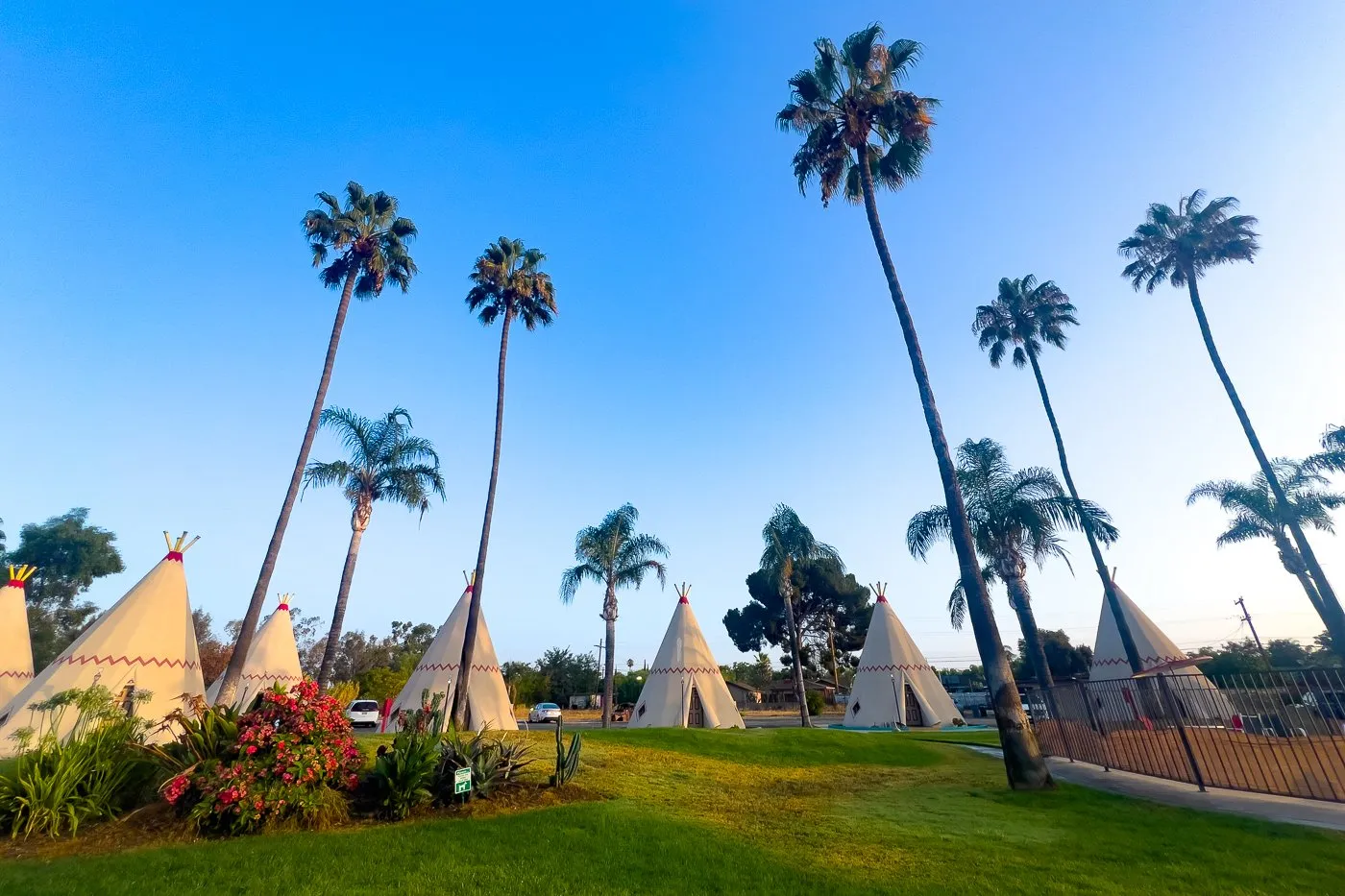
In Missouri, the Wagon Wheel Motel has operated since 1936 and still lights its restored neon sign after dark. Nearby, the Munger Moss Motel dates to the 1940s and remains another classic Mother Road stay.
Then there’s Tucumcari, New Mexico, where you can practically make an evening out of the neon.
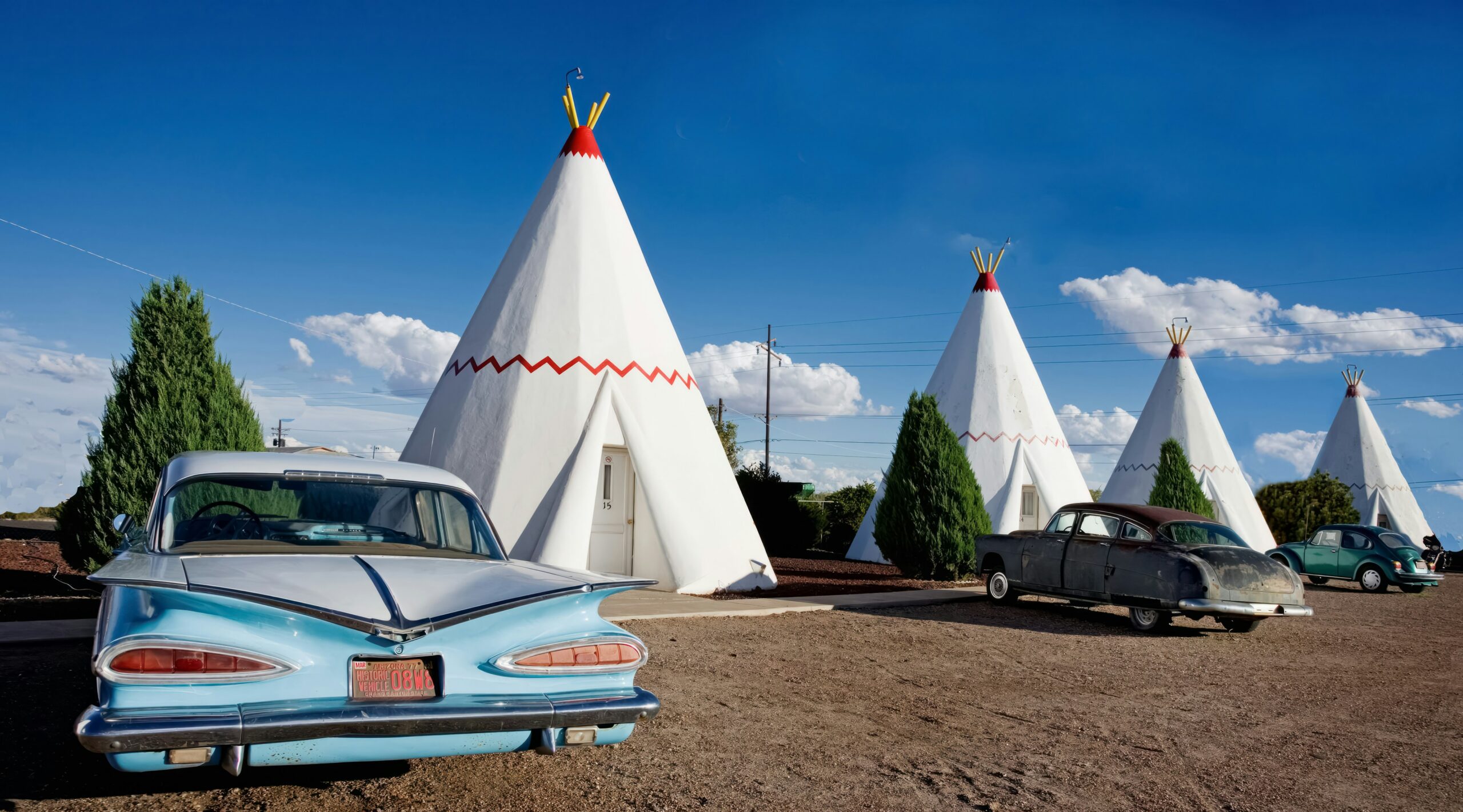
Standout accommodations with classic Route 66 appeal:
- Rail Haven Motel in Springfield, Missouri
- Wagon Wheel Motel in Cuba, Missouri
- Boots Court Motel in Carthage, Missouri
- Skyliner Motel in Stroud, Oklahoma
- Historic El Rancho Hotel in Gallup, New Mexico
- Blue Swallow Motel in Tucumcari, New Mexico
- Motel Safari in Tucumcari, New Mexico
- Wigwam Motel in Holbrook, Arizona
- El Trovatore Motel in Kingman, Arizona
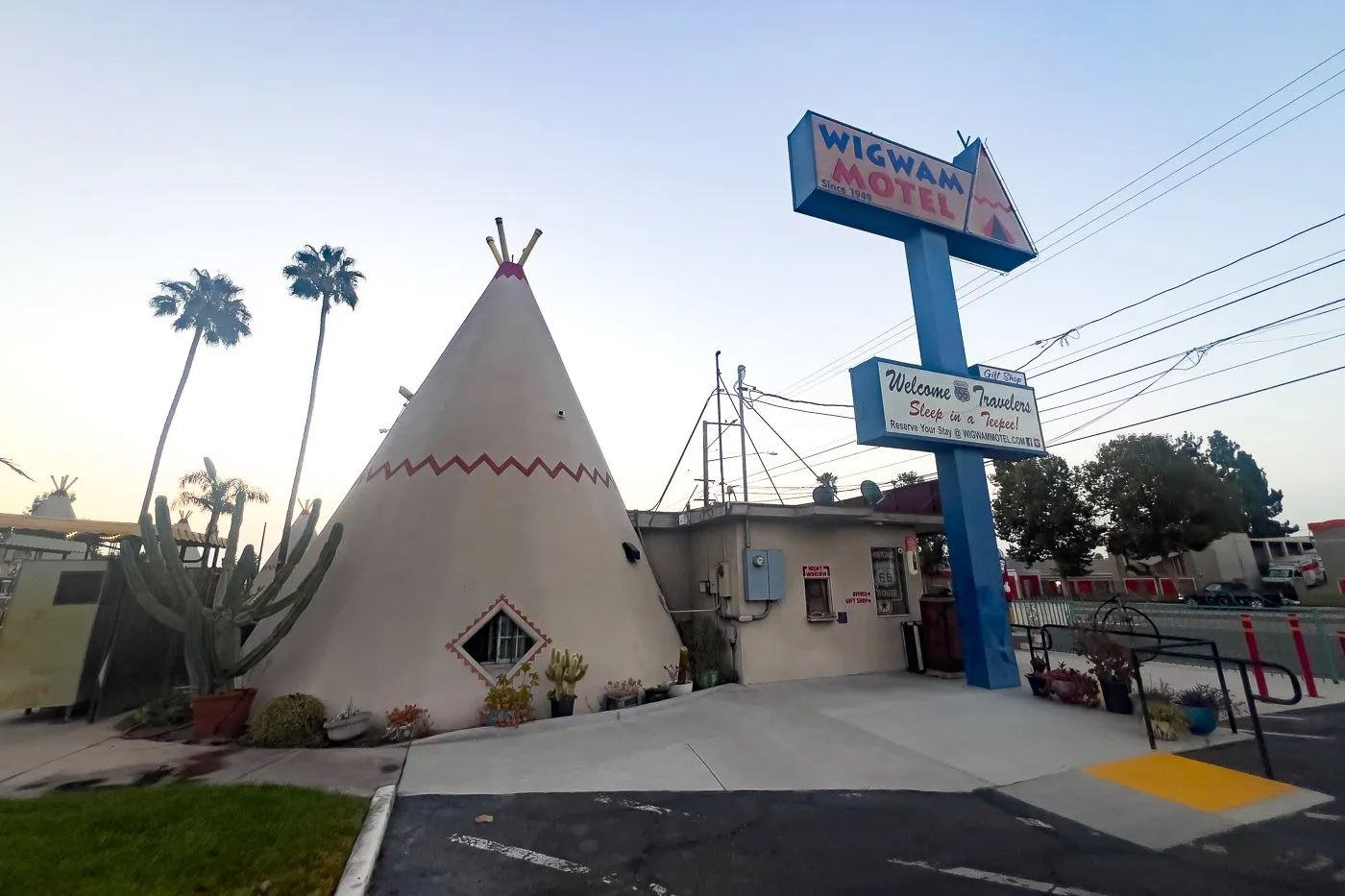
- Wigwam Motel in San Bernardino, California
7. Stop at a Museum Just Because
Eventually all the signs, buildings and bypassed highway start making more sense when you understand what happened here.
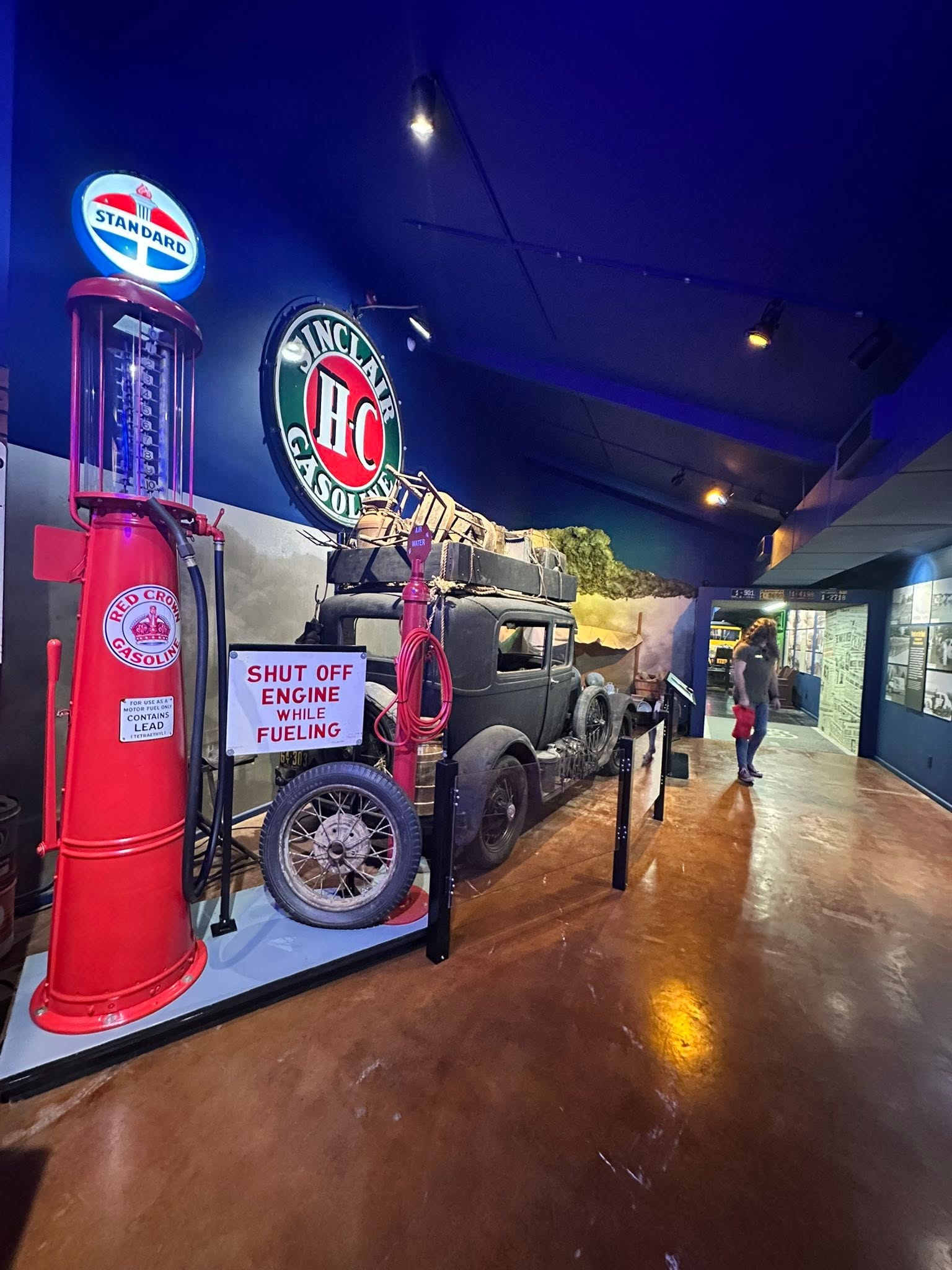
The Illinois Route 66 Hall of Fame & Museum in Pontiac includes historic displays, authentic artifacts, period correct vehicles and signage, vintage gas pumps, and even Route 66 artist Bob Waldmire’s Volkswagen van.
In Oklahoma, you’ve got both the National Route 66 Museum in Elk City and the Oklahoma Route 66 Museum in Clinton. Elk City’s museum focuses on the people, automobiles and places that defined the road, while Clinton’s museum walks visitors through different eras of highway travel with vintage vehicles, recreated diners, motels and immersive exhibits.
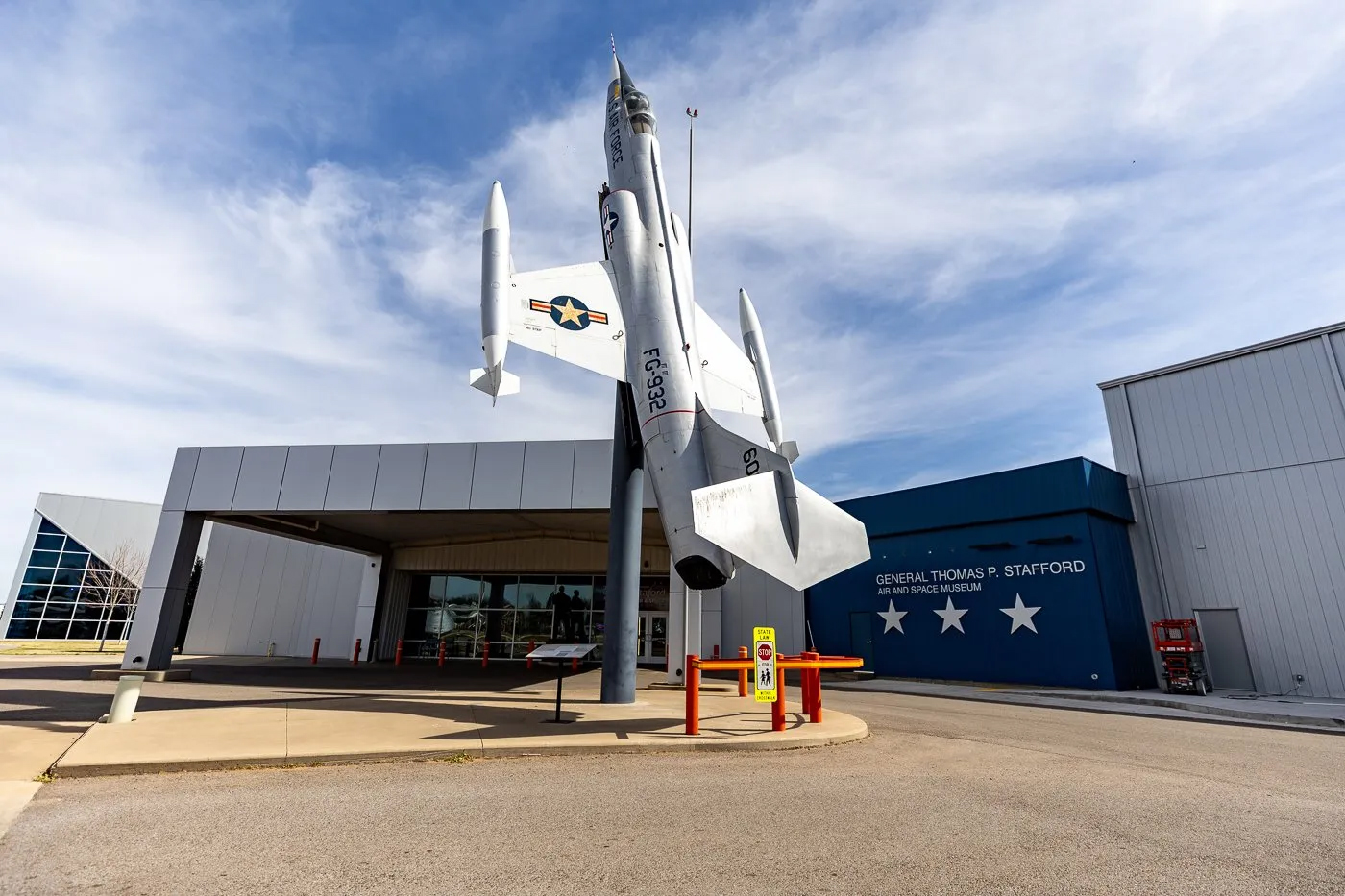
Weatherford adds the Stafford Air & Space Museum and Heartland of America Museum if you want to wander farther into transportation and regional history.
You don’t need to hit every museum. Hit enough that the old road starts talking back and provides authentic perspective.
8. Make Room for the Weird Stuff
Back in the day the Route 66 road trip was such a popular activity, establishments along the way worked “creatively” to distinguish themselves from neighboring competition. Thus the random and bizarre “roadside attraction” was born.
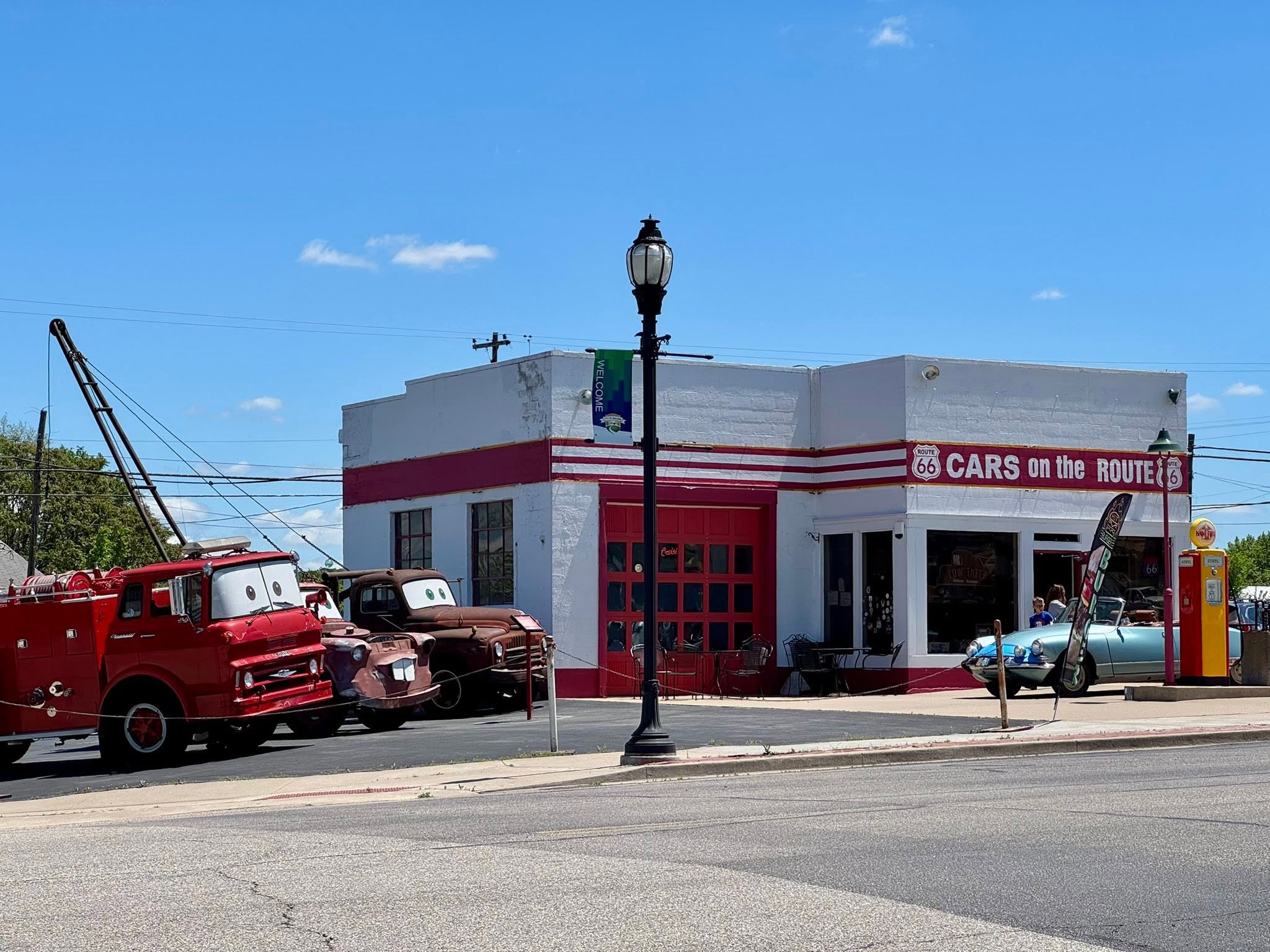
Then there are places like Tee Pee Curios, Elmer’s Bottle Tree Ranch, roadside Muffler Men, giant signs, vintage gas pumps, weird sculptures and old buildings somebody saved simply because losing them would make the road less interesting.
Here is a snap shot of Route 66’s weirdness and personality.
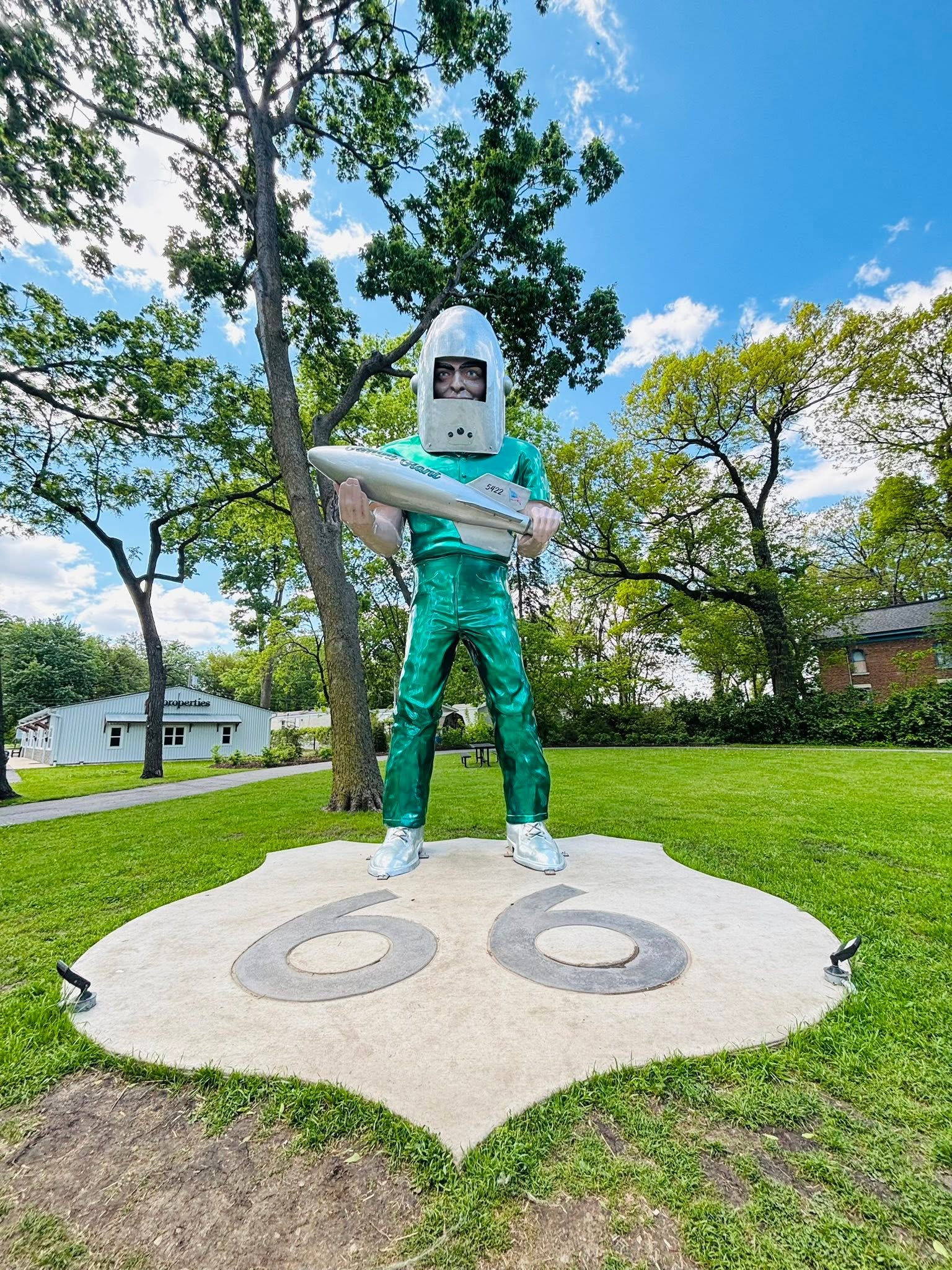
- Gemini Giant — Wilmington, Illinois:
Giant green Muffler Man spaceman and one of the most iconic roadside giants. - Meramec Caverns — Stanton, Missouri:
Historic cavern attraction made famous by legendary roadside advertising. - Cars on the Route — Galena, Kansas:
Vintage service station, old pumps, classic cars, and a Tow Mater inspiration. - Blue Whale of Catoosa — Catoosa, Oklahoma:
Giant handmade blue whale that became one of the quirkiest photo stops. - Pops 66 Soda Ranch — Arcadia, Oklahoma:
A 66-foot illuminated soda bottle landmark and hundreds of soda flavors for sale. - U-Drop Inn & Conoco Tower — Shamrock, Texas:
Stunning Art Deco gas station and café that is straight out of Route 66’s golden era. - Cadillac Ranch — Amarillo, Texas:
Cadillac cars buried nose-first in the dirt is a famous automotive art installation. - Jack Rabbit Trading Post — Joseph City, Arizona:
A classic roadside stop with a giant “HERE IT IS” sign and fiberglass jackrabbit. - Hackberry General Store — Hackberry, Arizona:
A vintage roadside time capsule full of cars, gas pumps, signs, and automobilia. - Giganticus Headicus — Kingman, Arizona:
Giant green tiki-style head surrounded by oddball roadside art and pure weirdness.
9. Make the Centennial Part of Your 2026 Trip
Route 66 only turns 100 years one time and Route66centennial.org is committed to making the most of it.
Communities across the Mother Road are marking the occasion with Centennial events, car shows, public art, preservation projects, tours and new Route 66 monuments throughout 2026. The official Centennial calendar lets travelers search upcoming events by state.
The Route 66 Centennial Monument Project is especially useful for building another layer into your itinerary. New placemaking monuments are appearing at destinations including Azusa, Claremont and Newberry Springs in California; Albuquerque, Gallup-McKinley County and Tijeras in New Mexico; Countryside and Lexington in Illinois; and numerous Oklahoma communities including Chandler, Chelsea, Claremore, Clinton, Elk City, Sapulpa, Stroud and Weatherford.
Think of them as another scavenger hunt along the highway.
The Centennial organization is also developing a commemorative Route 66 Centennial Passport, alongside programs covering historic preservation, photography, storytelling and road-trip experiences.
If you’re doing Route 66 in 2026, lean into the birthday party.
10. Spend Money in the Small Towns
Route 66 survives because people along Route 66 keep it alive.
Buy lunch.
Grab the T-shirt.
Stay in the old motel.
Visit the museum.
Put some fuel in the tank.
The National Park Service identifies more than 250 Route 66-related buildings, bridges, road alignments and other places listed on the National Register of Historic Places, and many surviving communities still depend on travelers choosing to stop.
